
Social Aspects of Geothermal Energy Research

Profile of the Working Group
Motivation & background
Deep geothermal energy could be an important component of a sustainable and resilient energy supply in the future. When developing technological innovations, it is important to consider the social context. At a national level, deep geothermal energy is often recognized as a climate-friendly energy source. At local level, however, reservations, concerns and resistance are often evident. These aspects are particularly evident in emotionally charged debates and are often reflected in a strong perception of risk among the population.
Our focus is on the question of how geothermal research can be communicated and shaped together with social stakeholders. One example of this is the joint environmental monitoring of research infrastructures or geothermal projects in collaboration with the research group "Seismic methods and participatory monitoring".
Research priorities
The focus is on the question of how deep geothermal energy is embedded in social contexts. At the same time, we are investigating how stakeholders can be more closely involved in research processes through participatory approaches in order to promote the social acceptability of the technology. Transparent communication of research content plays an important role here.
The thematic focal points include
- Science communication and dialog formats
- Participatory research approaches such as citizen science and co-designe.g. participatory monitoring
- Perception of the risks and benefits of geothermal projects
- Acceptance and social acceptability
- Integration of social requirements into technical planning
Objectives
In this context, science is seen as an active player in the energy transition and as an intermediary between technology, politics and society. The aim is to support a constructive social discourse through responsible and dialog-oriented research and to promote the sustainable use of geothermal energy.
The focus is on the following overarching goals:
- Strengthening social acceptance of deep geothermal energy
- Supporting evidence-based decision-making processes
- Building long-term trust structures
- Establishing participatory research cultures
Methodological approaches
The work is based on an integrative research approach in which social science methods are combined with geoscientific expertise. The methods used include
- qualitative and quantitative surveys
- continuous dialog with stakeholders
- interactive exhibitions andworkshops
- school projects and role plays
- participatory monitoring
- transdisciplinary evaluation
The aim is to systematically integrate social requirements into technical models and decision-making processes.
Projects and activities
Project communication
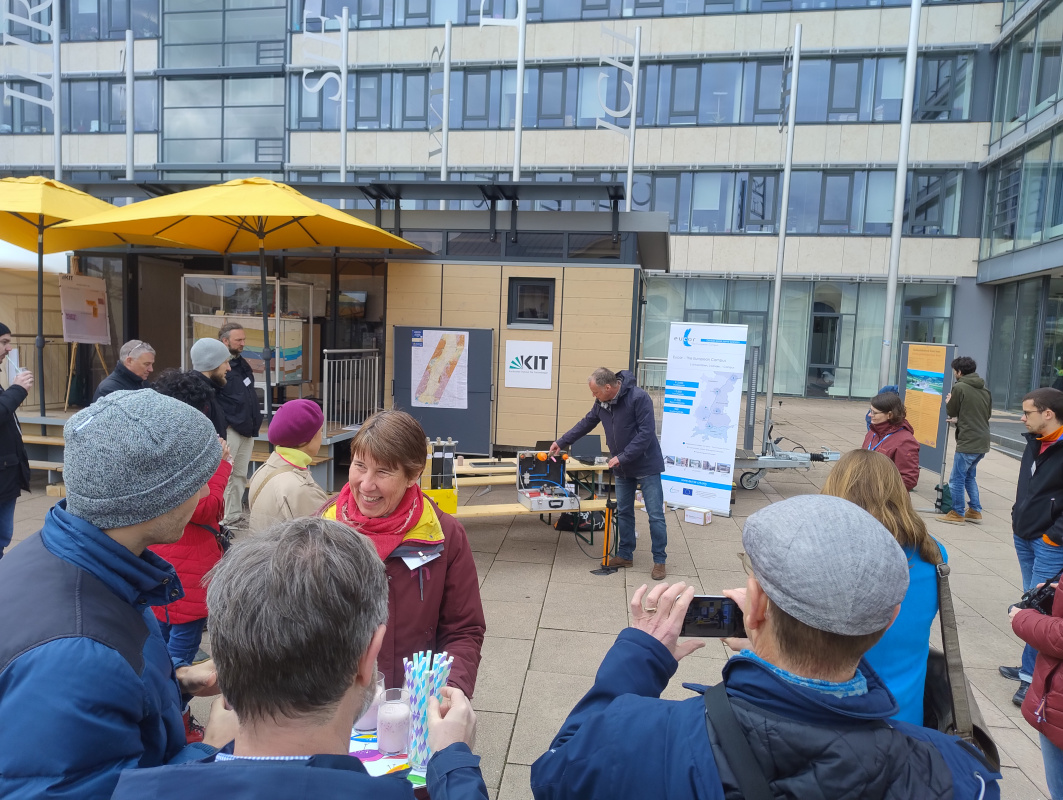
We believe that Helmholtz research infrastructures should also serve as a platform for dialogue between researchers, stakeholders, and the public. That is why we focus on project communication that combines information, dialogue, and the incorporation of diverse perspectives. We create formats for exchange with stakeholders from the scientific community, politics, and society, and involve diverse stakeholders in the development of research infrastructures and geothermal research.
Participatory seismic monitoring
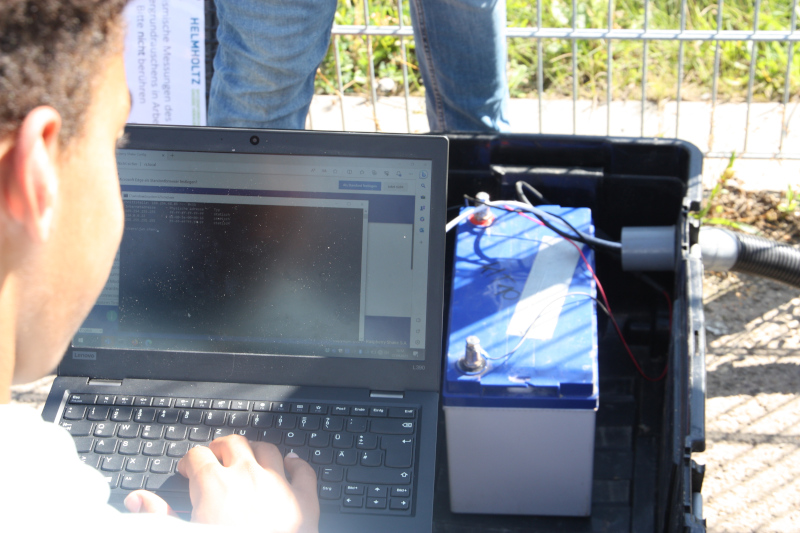
As part of the GeoLaB and DeepStor research infrastructures, we are working on joint environmental monitoring networks. For example, seismometers will be hosted by interested local residents and integrated into the monitoring network. The goal is to expand the measurement network, promote transparency in monitoring and research, facilitate science communication, and foster mutual learning.
School and educational projects
The development of role-playing games, experiments and school projects serves to communicate geoscientific content and scientific and technical contexts.
Mobile dialog formats and exhibitions
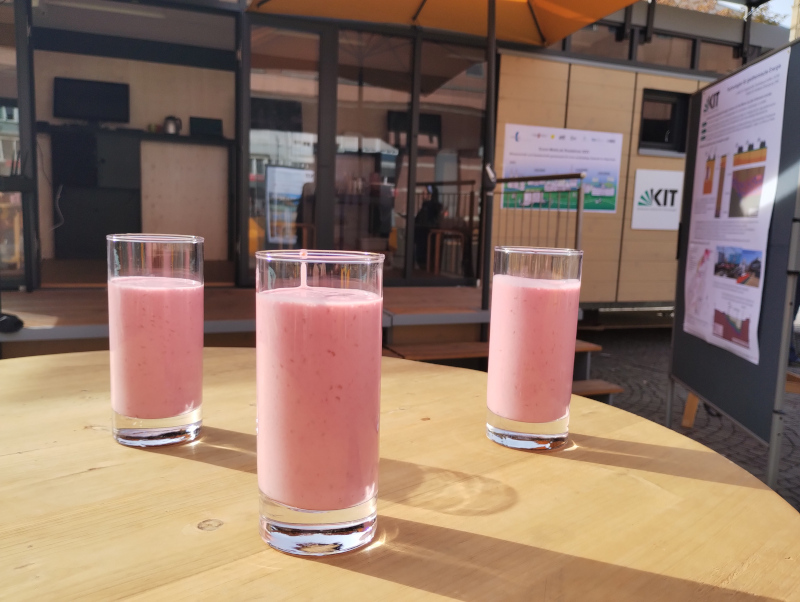
MobiLab activities, marketplace events and exhibitions enable low-threshold encounters with science and a direct exchange with researchers.

| Name | Tel. | |
|---|---|---|
| Auerswald, Alessa Project Communication |
+49 721 608-45225 +49 151 57217778 |
alessa auerswald ∂does-not-exist.kit edu |
| Bremer, Judith Scientific coordination; Group leader |
+49 721 608-42944 | judith bremer ∂does-not-exist.kit edu |
| Lewing, Tatjana |
+49 721 608-45292 | tatjana lewing ∂does-not-exist.kit edu |
| Schwald, Regina Science Communications |
+49 721 608-45291 +49 163 7718755 |
regina schwald ∂does-not-exist.kit edu |

Scientific coordination; Group leader
 +49 721 608-42944
 judith bremer ∂does-not-exist.kit edu
 geothermics.agw.kit.edu/team_211.php
 251
251 50.40 Campus Süd